It’s amazing how coconuts conjure up images of tropical beaches shaded by coconut palms. Just the thought of these beaches makes me long to return to the Seychelles where coconut palms provide refreshing shade on pristine beaches. Even better is to buy a fresh coconut from a street vendor and laze on the beach sipping fresh coconut water while soaking up the view.
The coconut has been an important part of human life for centuries. Often called the “Tree of Life”, the coconut palm provides food, liquid, oil, fibre, timber and shelter making it one of the world’s most useful plants.
Coconuts are a member of the palm family and are the only living species of the genus Cocos. They originate in the Indo-Pacific region. Because coconuts (the seed of the coconut palm) can float and remain viable for months, ocean currents helped disperse them across vast distances around tropical coastlines where they would germinate and take root. Coconuts were a valuable portable food source for early sailors and traders. These portable, nutrient dense, long lasting seeds were often taken on long sea voyages. By the 16th century, Portuguese and Spanish explorers had transported coconuts to Africa, the Caribbean and the Americas, where they became an important crop.
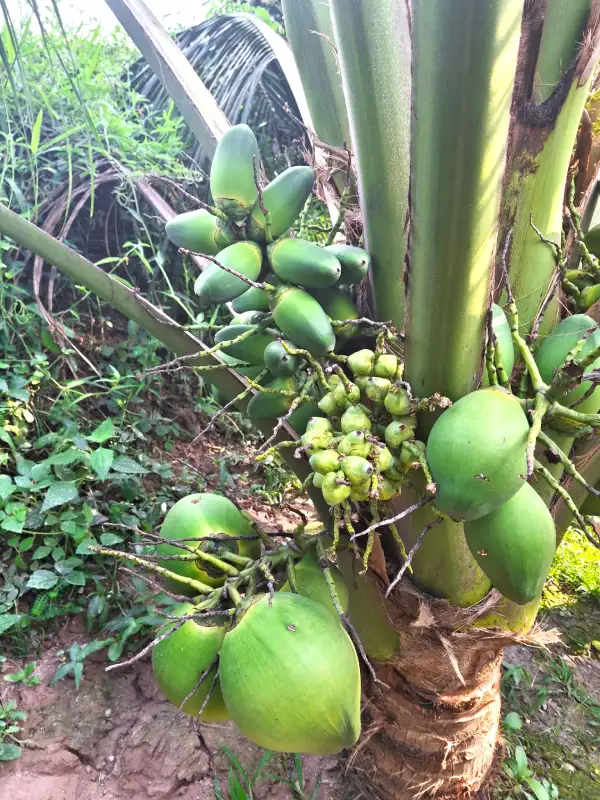
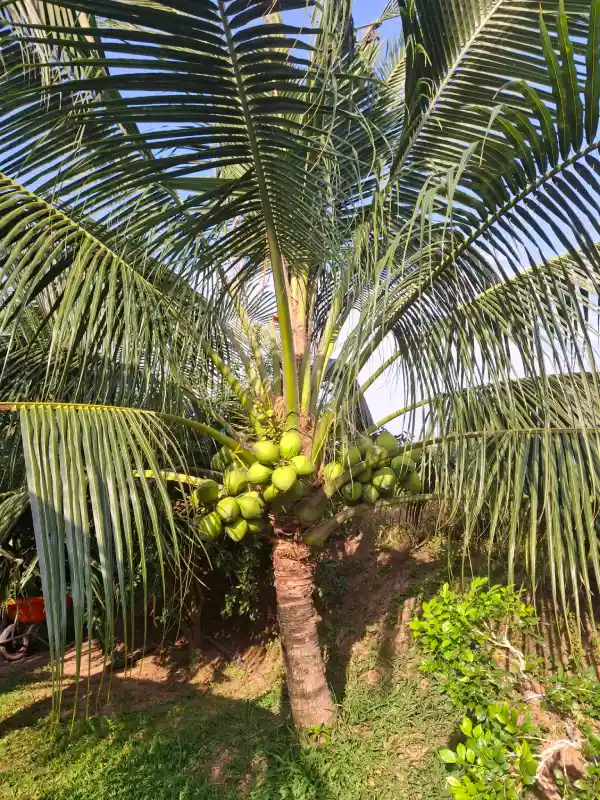
Coconut palms can grow up to 30m tall and yield up to 75 fruit each, per year! While travelling in Vietnam in January 2026, we went on a tour of a coconut grove in the Mekong Delta. The trees in this grove were unusually short allowing us to pic the fruit from the tree without a ladder.

From ancient coastal communities to modern kitchens around the world, the coconut continues to be celebrated as a symbol of nourishment, sustainability and tropical abundance.
A hard nut to crack: What’s in it for me?
Raw coconut flesh is made up of 47% water, 33% fat, 15% carbohydrates and 3% protein. Coconut is a good source of manganese and copper.
Because of their high oil content, the nutritional value per 100g of coconut is: 1480 kJ of energy.
Nutritionally, coconut oil is high in saturated fats, so it should be enjoyed, in moderation, as part of a balanced diet.
Shell-ebrating Coconut:
Life is better when you are a little nutty!
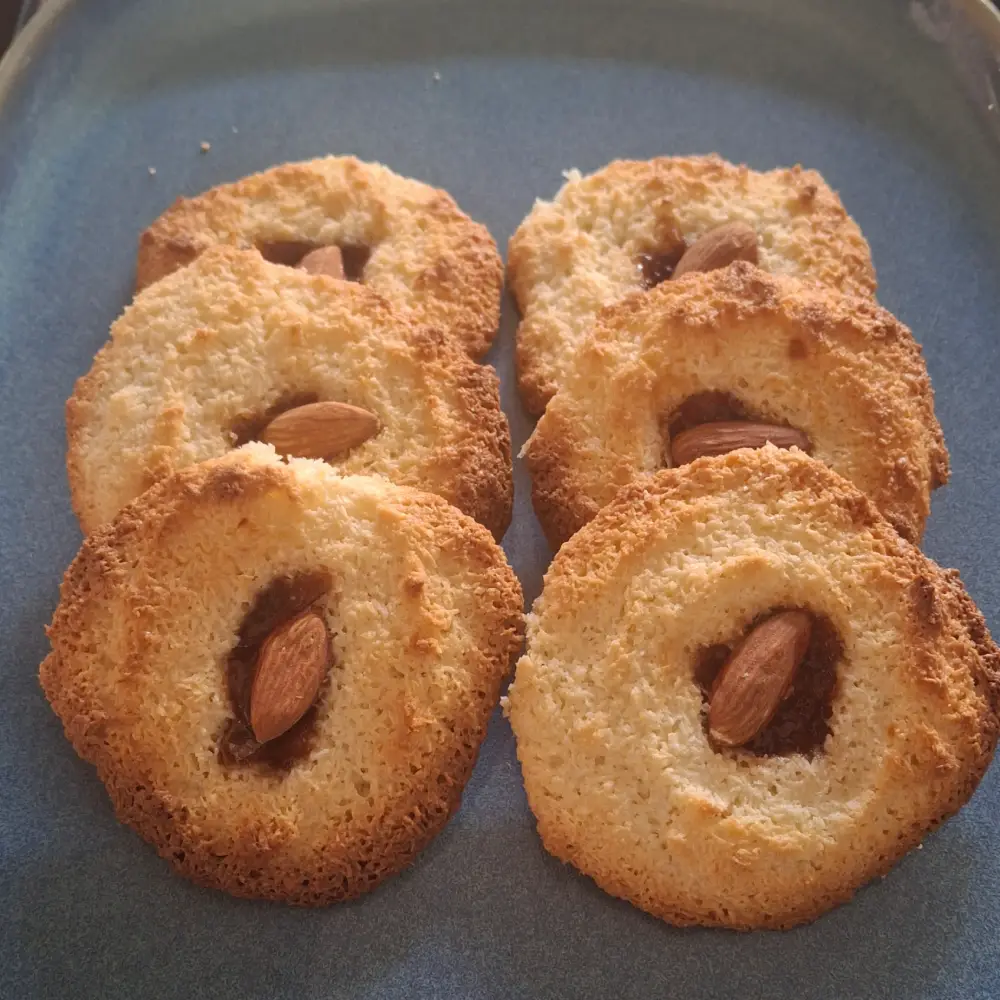
Our free recipe this month makes a delicious crunchy yet chewy coconut biscuit with a blob of apricot jam to offset the sweetness and a crunchy nut, this biscuit ticks all the right boxes.
Coconut, Jam & Nut Biscuits
Makes about 30 biscuits
Ingredients:
- 1 egg separated
- 1 tin condensed milk
- 10 ml lemon juice
- 15 ml cornflour/potato flour
- 220 g desiccated coconut
- 60 ml apricot jam (I prefer homemade as it is more tart than shop bought)
- 1 almond per biscuit (approx. 30 almonds)’
- A little water in a bowl
Method:
- Preheat oven to 180⁰ C and line 2 – 3 baking pans with baking paper.
- Beat egg white in a small bowl until just forming stiff peaks:
- In a separate large bowl, beat well together:
- 1 tin condensed milk
- 10 ml lemon juice
- 15 ml cornflour (or potato flour)
- 1 egg yolk
- Add 220g desiccated coconut and stir well.
- Fold the beaten egg white into the condensed milk/coconut mixture using a large metal spoon.
- Drop slightly heaped teaspoonfulls of mixture onto prepared baking sheets, leaving sufficient space for spreading of the biscuits (I usually fit about 12 biscuits per baking sheet).
- Dip your thumb into the prepared water and press your wet thumb into the centre of each ‘biscuit’ to form a well (do not go all the way through to the baking sheet).
- Fill each indent/well with jam. Press an almond into the jam on each biscuit.
- Bake at 180⁰ C for 8 minutes, then turn the oven down to 160⁰ C and bake until the biscuits have golden, crispy edges going lighter into the centre (another 5 to 8 minutes).
- Remove biscuits from the oven. Allow to cool on the baking tray. Transfer to a cooling rack only once biscuits are cool to the touch.
Warning: these biscuits are dangerously moreish