Rice, in its domesticated form, feeds over half the world’s population, making it a staple and grain attraction worldwide! Rice grows on every continent except Antarctica. Rice, the seed of a grass species, belongs to the cereal family Poaceae – with the most common variety being Asian Rice (Orysa Sativa) which was domesticated some 10 000 years ago. Contrary to popular belief, rice plants should not be continuously submerged but thrive when exposed to cycles of submersion and partial drying of soil.
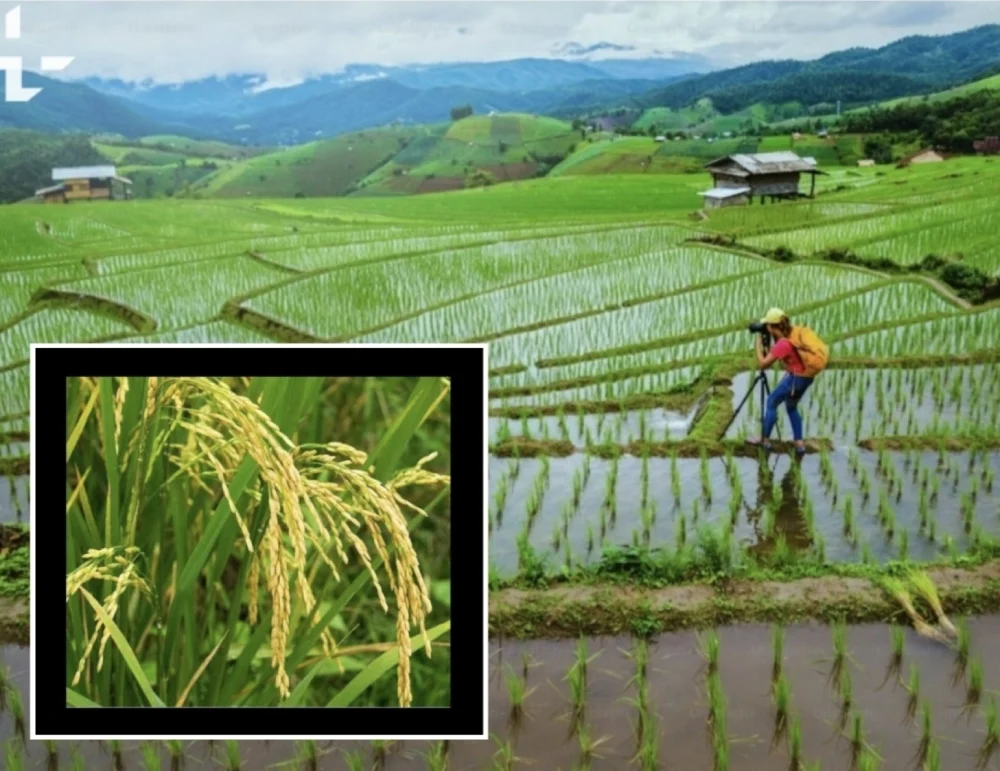
Rice Field image from Unsplash (Getty Images)
This month, I am sharing my nourishing, ‘rice ‘n easy’ Chicken Fried Rice recipe with you, so keep reading to find the link to access this delicious recipe.
Steamed up about Rice: What’s in it for me?
Rice contains no gluten, is rich in energy-giving starch and contains some protein.
The starch in rice consists of long chains of glucose called amylose and amylopectin. Different rice varieties have different properties depending on the quantities of each of these types of glucose. Basmati rice is rich in amylose which does not become sticky when cooked. Rice that contains lots of amylopectin, like sushi rice and Arborio rice (risotto rice) which becomes sticky once cooked making it easier to eat using chopsticks.
Amylose takes longer to digest than amylopectin, so rice like amylose rich Basmati rice gives a feeling of satiety for longer and does not cause a sudden spike to sugar levels as do other rice varieties.
Rice up your life:
There are thousands of different types of rice that can be processed, including white, brown and wild rice.
From seed to harvest takes about 6 months. Rice grains are ready to harvest when their moisture content is 20 – 25%. Harvesting includes reaping the grains (either by hand on small farms or using machinery on commercial farms), threshing to separate the grains, cleaning or winnowing of the grains and drying the grains in the sun on mats to ensure longer life and to minimize spoiling of grains by fungi.
Rice yields can be severely affected by pests including insects, rodents, birds, weeds and diseases such as rice blast. New polyculture farming techniques are enjoying success in limiting pests. Rice–duck farming is a modern farming technique that integrates earth friendly pest management by introducing ducks to rice paddies – this is being used increasingly in eastern countries like Vietnam. Aquaponics is
another innovative pest management rice farming technique. In this rice-fish farming method, a symbiotic ecosystem is created where fish and rice co-exist, with the fish feeding on various insects, larvae and nymphs that may damage rice crops (like rice stem borer and plant hoppers) as well as young weeds, reducing the competition with rice plants. This farming approach can reduce the need for chemical pesticides by up to 68% while also increasing rice yields.
Brown and rice both come from the same grain. The degree of processing results in the two main rice variants:
Rice to the challenge!
Do you struggle to achieve perfectly cooked rice? I am a master at burning rice as I always have too many things to do and forget rice cooking on the stove. Below is my tried and tested techniques for cooking rice to perfection in the microwave – quick, mess free and perfect every time – plus the microwave has a timer, so turns off before your rice ever gets near being burnt.
Use a medium sized microwave proof dish with a lid (like Corningware).
| Tastic Rice | Brown Rice | White Basmati Rice |
|---|---|---|
| 1 cup rice 2 cups water Large pinch of salt TASTIC rice will take about |
1 cup rice 2.5 cups water Large pinch of salt BROWN rice will take about |
1 cup rice 2 cups water Large pinch of salt White BASMATI rice will |
|
Place the rice, water and salt into a microwaveable dish. Microwave on HIGH with the lid OFF for the specified time. Remove from the oven, mix with a fork, place a lid onto the dish of rice, leave to rest for 10 – 15 minutes until all the water is absorbed. |
||
REMEMBER TO TASTE A LITTLE BIT OF RICE AFTER THE RESTING PERIOD TO SEE IF IT IS COOKED.
Christine’s hot tip: it is best to place raw rice in a sieve and rinse well under cold running water to remove excess starch before cooking.
On a Rice-ous mission
Our free recipe this month is a favourite of my family, it hits the rice spot every time! Packed with nutrients, this dish is a one-pot wonder, perfect for a busy weeknight meal or to use up left over rice and cooked vegetables. I use frozen mixed vegetables (peas, cubed carrots, corn) but feel free to precook veggies and use them instead. This meal makes an easy to eat, nourishing convalescent meal too!
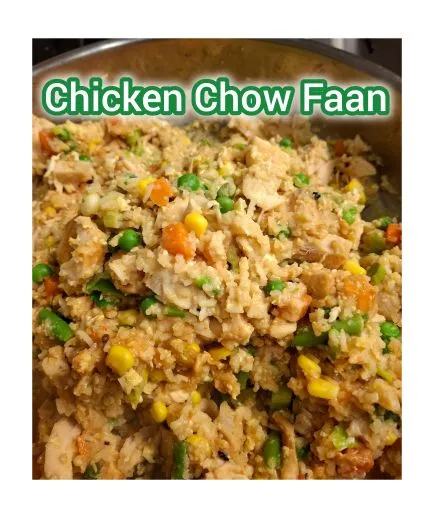
Chicken Fried Rice (Chow Faan)
A savoury, nourishing, quick and easy Chinese fried rice dish that makes a delicious meal in a bowl
(serves 4)
Ingredients:
- 3 skinned and deboned chicken breasts – cut into bite sized pieces
- Salt and black pepper
- 45 ml sunflower/olive/avocado oil for frying
- 500 ml frozen vegetable mix – peas/corn/carrot cubes
- 125 ml boiling water
- 3 – 4 eggs – beat with a fork in a bowl
- 750 ml pre-cooked rice (eg brown rice / basmati – don’t use glutinous rice)
- 3 spring onions (green onions) – chopped
- 30 ml soy sauce
- 60 ml water
- 5 ml (or 1 cube finely chopped) of chicken stock
Special Equipment: Large Frying Pan or Woken vegetables into a large microwave safe bowl, add the boiling water and cook for 2 minutes on high in Microwave. Drain off water.
Method:
- Cut chicken into bite sized pieces and season well with salt and pepper.
- Place oil into pan/wok and heat oil. Add chicken and fry until it is
cooked. Remove chicken from pan and place onto a plate/bowl. - Place the frozen vegetables into a large microwave safe bowl, add the
boiling water and cook for 2 minutes on high in Microwave. Drain off
water. - Place beaten egg into hot frying pan/wok. Place the rice on top of the
egg and stir-fry until the egg and rice are well combined and the egg is
cooked. - Add the cooked chicken and vegetables to the rice/egg mixture and stir
fry until well combined. - Add the sliced spring onion, soy sauce, chicken stock and water and cook
for 1 – 2 minutes. - Stir well and serve immediately, piping hot.
Garnish with chopped spring onions.