Often relegated to the role of merely a garnish, parsley is a nutrient powerhouse that deserves a more prominent place in our diet. This bright green, annual herb originates in Greece and was historically widely incorporated in dishes in the Balkans, Algeria and Morocco. Naturalised in Europe and incorporated in dishes in Britain from around 1550, this nutrient dense herb is now commonly available worldwide and is used to elevate the flavour of soups, sauces, stews, savoury tarts and salads.
Keep reading, my delicious, light, nutritious Cheese and Parsley Tart recipe can be found near the end of this article.
Fresh Facts: What’s in it for me?
Studies show that parsley helps keep blood sugar levels steady, supports cardiovascular, renal and skeletal health.
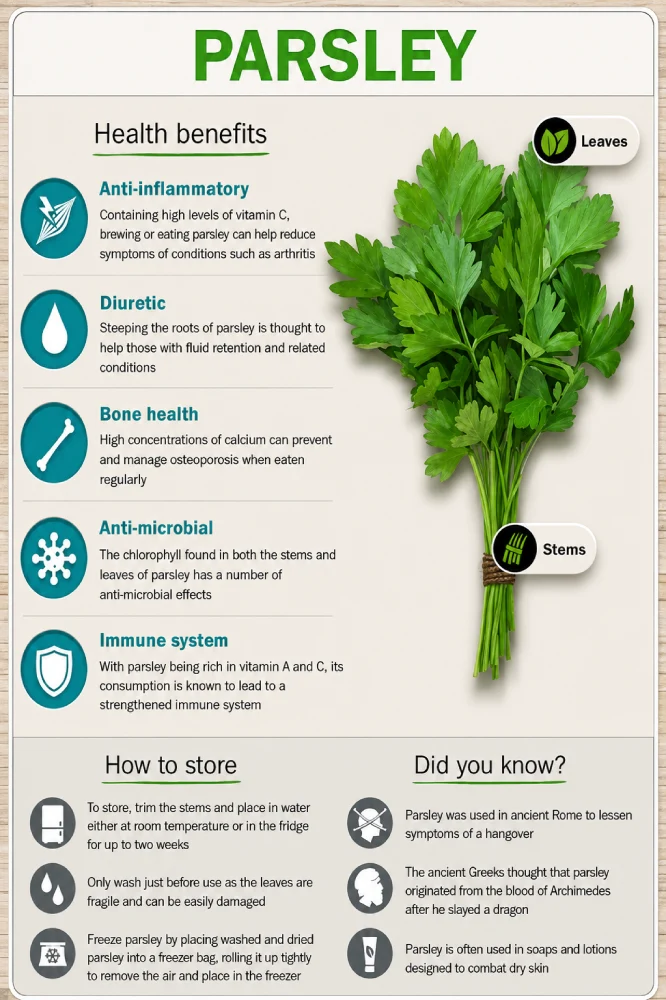
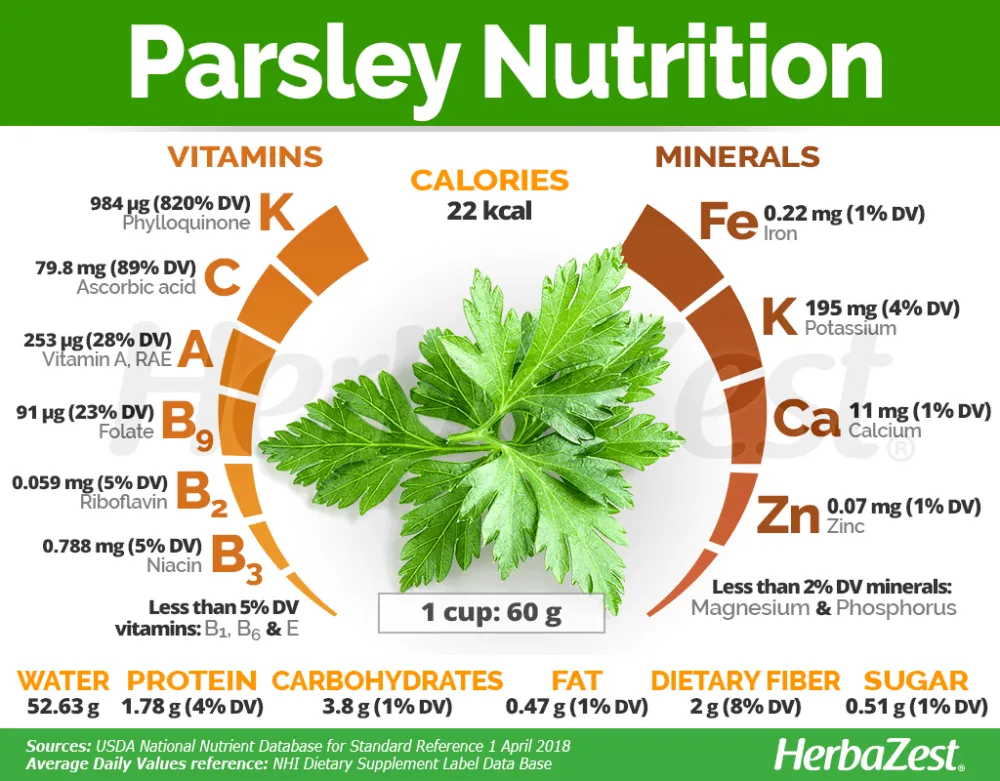
Just two tablespoons of chopped parsley (8 g) provides 150% of the daily required amount of Vitamin K which is largely responsible for bone and heart health and is essential for proper blood clotting. Along with supplying Vitamin K, parsley activates the proteins involved in healthy bone formation and helps regulate calcium levels in the body.
Parsley also contains significant amounts of Vitamin C and A and supplies approximately 11% of required daily Folate and 10% DV Iron. It is a good source of magnesium, potassium, calcium and zinc too!
Recent studies suggest that parsley may help protect the kidneys from damage caused by toxins and can increase urine output and so aid removal of toxins from the body.
As with most things, parsley must be incorporated into a healthy diet and not eaten in excess, in order to achieve the best overall nutrition.
Historically, parsley has been used to freshen breath due to the anti-microbial properties of the chlorophyll it contains.
Storing Parsley
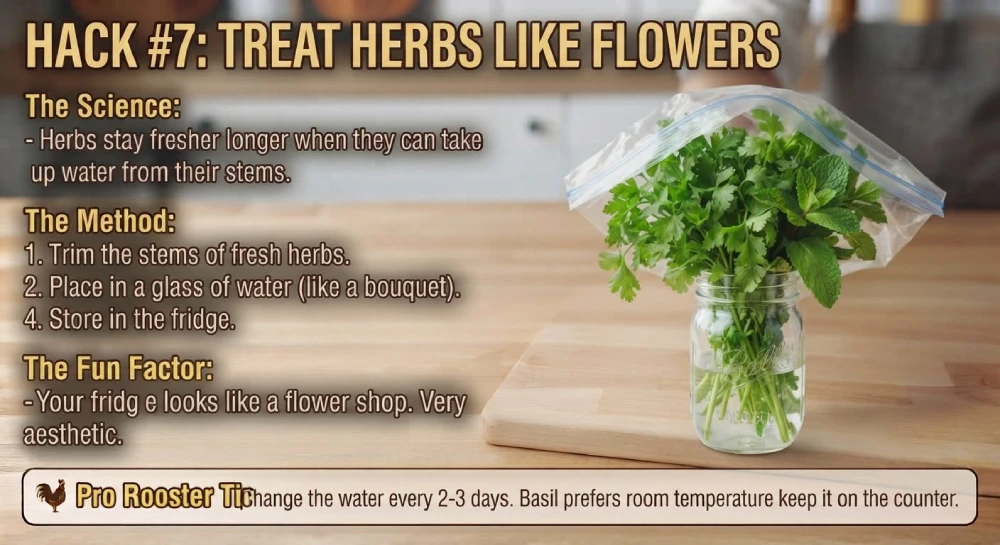
Fresh parsley will last best if treated like you would a bouquet of flowers. Prepare a jar with 2cm of water in it, trim off the bottom 1 cm from the parsley stems and place unwashed parsley in the jar. Cover the leaves of the parsley with a clear plastic bag to prevent wilting of leaves. Empty and refill the water every few days. In hot weather, store the jar of parsley in the fridge.
Parsley can be successfully dried and stored in airtight containers. Wash and shake parsley dry, blot with absorbent towel/paper. Strip the leaves from the tough stems and spread on a baking sheet. Bake at 60ᵒC for 2 – 3 hours until dry – remember to wedge the oven door open to prevent any steam build up. Crumble between fingers once dried. Store in an airtight container once dried and cooled.
Correct ratio of fresh vs dried parsley in recipes:
Cooking with Parsley:
Parsley is available as either Italian/flat leaf, often preferred in cooking for its strong flavour, or the more commonly recognized curly leaf variety, widely used as a garnish. Less well known is root parsley which is sometimes included in European cuisine. Parsley seeds however, are not safe for consumption as they contain a toxin.
When cooking with fresh parsley, it is best to add it as late as possible so that the nutrient content is not drastically reduced and it retains it brightness which is destroyed by heat.
Dried parsley however should be added early so that it has sufficient time to soften and impart flavour to the dish.
Our free recipe this month is a light, delicious Cheese and Parsley Tart. Serve with a crunchy salad as a lunch or light dinner, or make individual tartlets to serve as a starter, finger snack or lunchbox treat.
Cheese & Parsley Tart
A light, delicious, savoury tart that’s easy to make.
Ingredients: For the base
- For the base:
- 250 ml all-purpose flour
- 5 ml baking powder
- 1,25 ml salt
- 60 ml milk
- 60 ml vegetable oil
Ingredients: For the filling
- ½ onion – grated or very finely chopped
- 30 ml butter
- 45 ml all-purpose flour
- 375 ml milk
- 7,5 ml mustard (paste or powder)
- 2 eggs
- 5 ml salt
- 1,25 ml white pepper
- 375 ml grated cheddar cheese
- 125 ml fresh parsley – finely chopped or 45 ml dried parsley
Oven 180⁰ C
Greased medium sized pie dish/foil pie dish
2 large mixing bowls

Method: To make the base
- Mix the dry ingredients together in a large bowl. Stir in the oil and milk and mix well with wooden spoon until a soft dough forms (add a little more milk if dough mixture is too dry).
- Press into an ovenproof dish using your fingers – go up the sides and cover the base. Flute the edges of the pastry.
- Prick the base well with a fork.
- Par-bake for 10 minutes at 180⁰ C. Remove from oven and leave to cool for 10 minutes.
Method: To make the filling
- Place butter and onion into a medium sized pot. Fry until the onions go glossy (sauté). Remove from the heat.
- Add the flour and stir well until combined.
- Slowly add the milk, stirring well until a smooth, uniform, consistency is achieved.
- Return to the heat and cook, while stirring, until thickened for about 2 – 3 minutes. Allow to cool for 10 minutes.
- Lightly beat the eggs, mustard, salt and pepper together.
- Gradually add the egg mixture to the thickened sauce, stirring well until uniformly combined.
- Add the cheese and parsley.
- Pour filling mixture into par-baked, cooled pie shell.
- Bake at 180⁰ C, centre shelf, for 20 – 25 minutes until the centre of the tart is firm and the top is golden brown.
NOTE: Garnish with finely chopped parsley sprinkled over the surface of the tart. Serve warm with salad and crusty bread.